Wernersville State Hospital Cemetery
Location Wernersville, Pennsylvania
•
Years of Operation ca. 1918-1925
•
Number of Graves 49
About
The Wernersville State Hospital began in 1891 as the State Asylum for the Chronic Insane. By 1893, it held one hundred men and thirty women, all transferred from other state hospitals. The institution originated as a long-term care facility for those deemed non-violent but still in need of care, possibly to curb overcrowding and reduce stress on other state institutions. Quickly the hospital expanded, following the popular cottage plan of the time period. Patients were all expected to work, and it soon turned into a highly developed campus with immense infrastructure. Because patients were deemed non-violent, they could freely move in between buildings and on campus. Around 1925, the patient population approached its capacity of 1000. The population nevertheless grew to 1407 in 1935 and by 1942 it housed 1832. By 1970, the figure had dropped to approximately 1100 and, because of deinstitutionalization, continued to decline throughout the second half of the twentieth century. The Wernersville State Hospital is still active as an inpatient facility today with a capacity of 266 people. It now focuses on prepping patients for community living as opposed to prolonged stay and treatment. Most of the existing historical buildings have been repurposed for numerous state functions, with a large portion of the complex being used by the Wernersville Community Correctional Center.
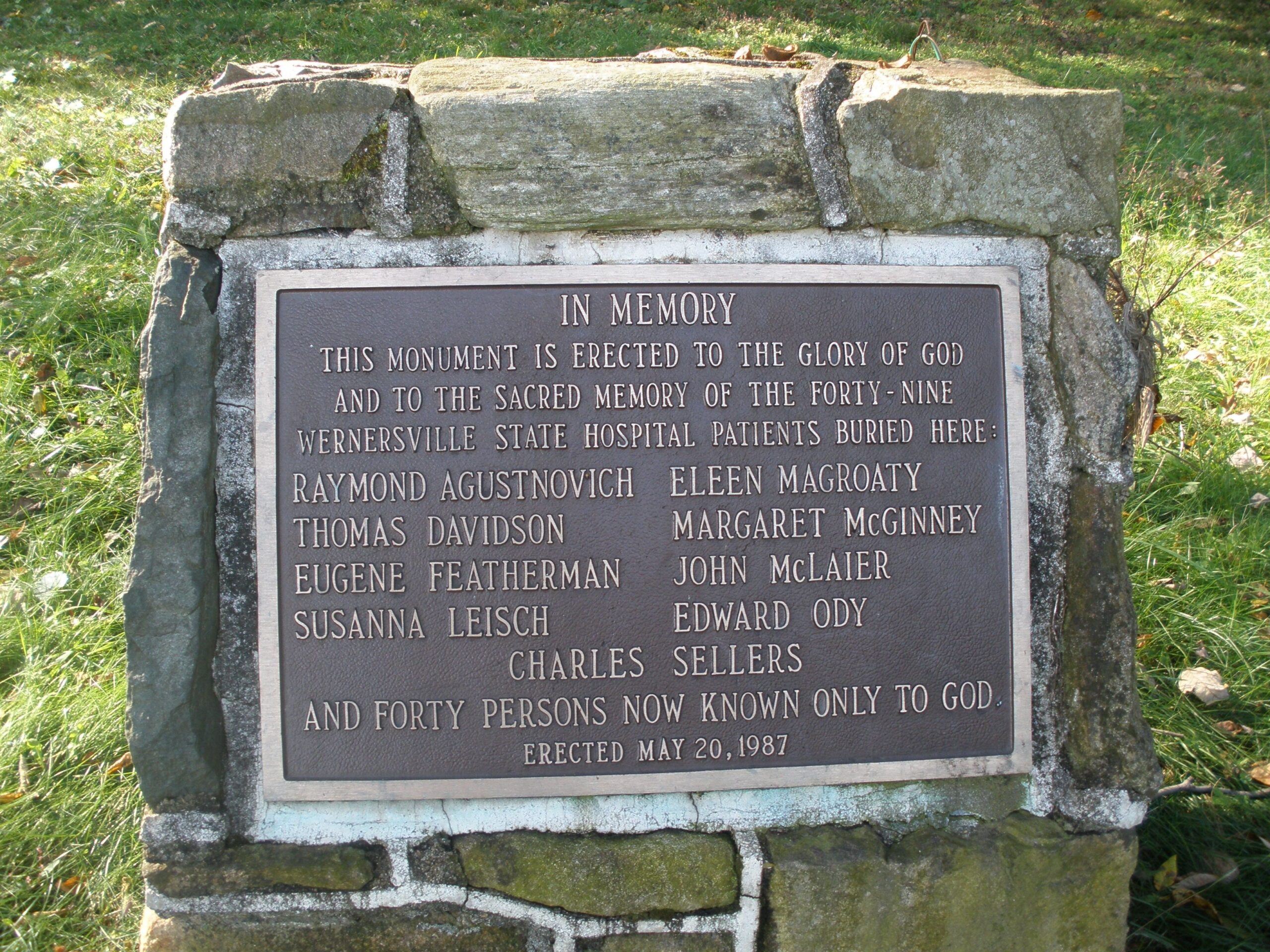
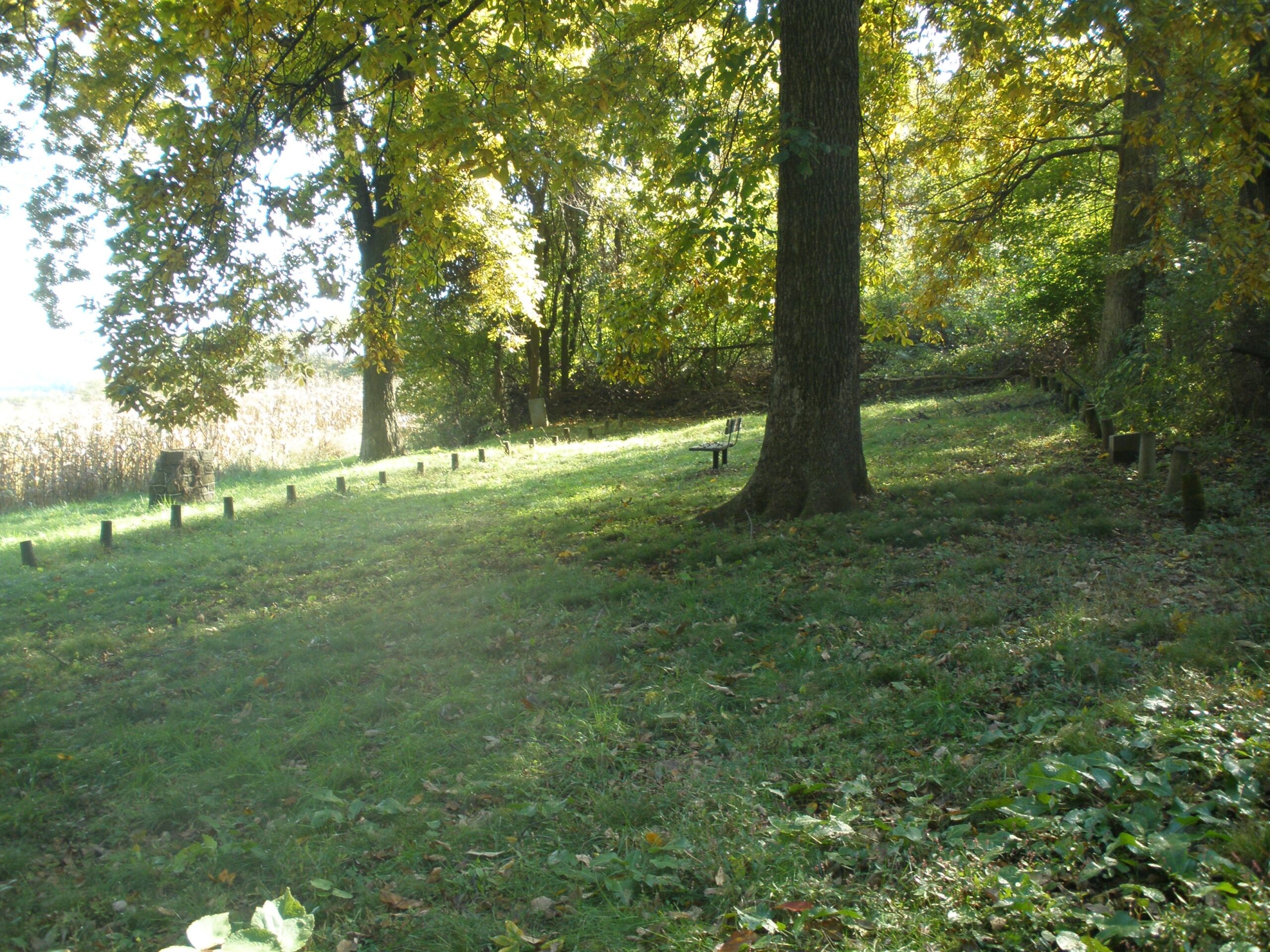
The institution has not used the cemetery in a century; the most recent available death certificate shows a year of death of 1925. According to findagrave, later burials took place at Saint John’s Hains Cemetery in its “East Triangle Section.” There now stands a plaque, erected in 1987, that lists the names of nine individuals followed by “AND FORTY PERSONS NOW KNOWN ONLY TO GOD.” As identification was successful with the aforementioned individuals, it is likely that the records of the forty other persons have been lost to time.
Access to the cemetery is restricted.